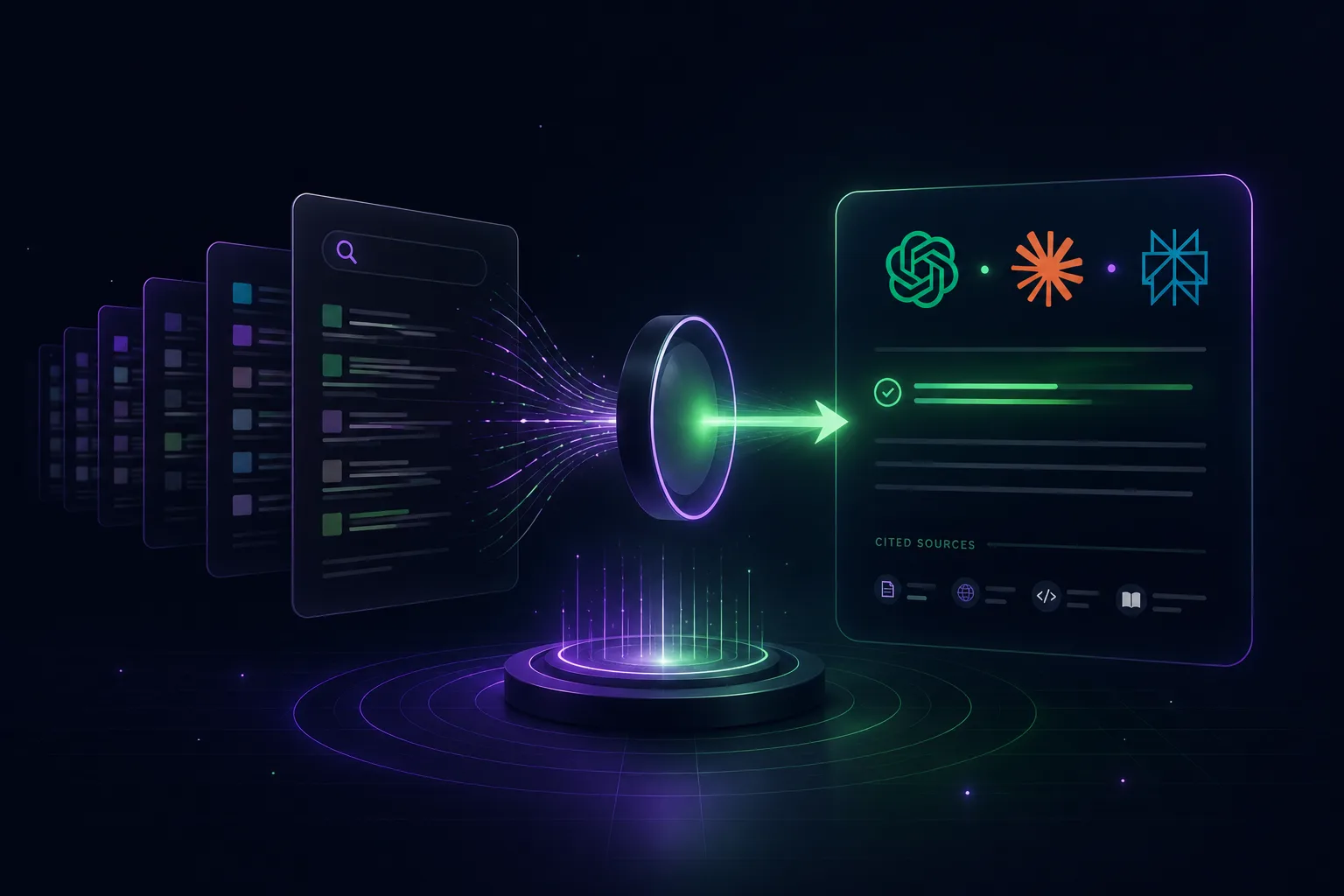

Answer engine optimization (AEO) is the practice of getting a brand cited as a source inside an AI-generated answer, rather than ranked in a list of links. Search engine optimization asked how do we rank. AEO asks a harder question: when ChatGPT writes the answer and names a few sources, how do we become one of them? For crypto and web3 brands the stakes are sharper, because the buyer increasingly never sees a results page. They read the answer and act on it.
These seven plays are what we do at GuerrillaBuzz. They are grounded in our own research, where we logged every source ChatGPT cited across 1,000 crypto buyer questions, so the tactics target how the engine actually behaves, not how we wish it did.
TL;DR
- Scope: earning ChatGPT citations for crypto, not SEO or paid media in general.
- The core shift: stop optimizing to rank, start optimizing to be the source the answer names.
- Play 1, biggest win: get onto the third-party "best X" pages ChatGPT quotes, not just your blog.
- Play 2: claim the registry and aggregator listings the engine treats as evidence.
- Plays 4 to 5: publish original data it cannot get elsewhere, and fix your name if it collides.
- Play 6: structure pages so the engine can lift a clean answer in one piece.
- Play 7: spread one claim across many domains so it reads as consensus, not marketing.
Key Numbers Behind ChatGPT Citations for Crypto
Four reference points from our citation research. None is a guarantee for any specific brand.
What ChatGPT Actually Cites When People Ask About Crypto#
Before any tactic, look at where the citations go. In our research, ChatGPT did not spread its sources evenly. It leaned on a few source types again and again: vendor and exchange domains, comparison and listicle pages, price-data aggregators, and a thin layer of encyclopedias and video. Forums and social barely registered.
The biggest mistake in crypto AEO is pouring everything into your own blog, the one source type ChatGPT trusts least.
Seven Plays to Get a Crypto Brand Recommended on ChatGPT#
The plays move from highest-impact to most-overlooked, grouped in three layers: where you appear, what you publish, and how the engine reads it.
Earn placement on the listicles and comparison pages ChatGPT cites for crypto
When someone asks ChatGPT for the best exchange or wallet, it rarely quotes a brand's own site. It quotes third-party roundups: "best crypto X," "top Y for Z," "alternatives to." Getting your client into those pages does more than any amount of owned content.
Get listed in the crypto registries and aggregators ChatGPT pulls from
Price and data aggregators are a mid-tier citation source the engine reaches for constantly. CoinCodex alone earned 90 ChatGPT citations in our run. Listings on data aggregators, a maintained CoinGecko and CoinMarketCap profile, a public audit, and a real GitHub presence put you inside the documents the engine cites.
The listings that earn citations:
- Data aggregator profiles, kept current with accurate descriptions.
- A published smart-contract audit from a recognized firm.
- An active, documented GitHub repository.
- Category directories specific to your niche.
Feed the video and community layer ChatGPT cites for crypto how-to questions
ChatGPT pulls video for beginner and how-to crypto questions, and a clear walkthrough with a clean transcript can surface where a blog post will not. The community layer is thinner than founders expect, so treat it as support, not foundation.
Publish original crypto data and documentation ChatGPT can cite as a primary source
Answer engines prefer to cite the origin of a fact over a site repeating it. Original research, real numbers, and thorough documentation give the engine something it cannot get elsewhere. This manual sits on exactly that base: the research it draws from became a citable source itself.
Win entity disambiguation so ChatGPT answers about your crypto project, not a namesake
Crypto names collide with films, fashion brands, and software. When the name is ambiguous, retrieval can answer about the wrong entity entirely. We have watched the engine confuse a crypto exchange with a hockey rink. Building a clean entity is defensive AEO most projects skip.
What builds the entity:
- Consistent naming that pairs the brand with crypto-context words everywhere.
- A Wikidata entry and, where it qualifies, a Wikipedia page.
- Organization and product schema that states what you are.
- A knowledge-panel footprint built from consistent off-site mentions.
Structure crypto pages for clean extraction by ChatGPT
A correct answer buried in a wall of prose loses to a worse answer the engine can lift in one piece. Question-shaped H2s, a lead sentence before the detail, short tables, and FAQ schema all make a page extractable. Structure is the cheapest AEO lever and the most ignored.
Build a multi-domain footprint so ChatGPT sees crypto consensus, not one claim
The engine triangulates. A claim that appears only on your own site reads as a single interested party. The same claim echoed across independent media, directories, and reference sites reads as consensus, and consensus is what gets cited. Spread the footprint before you need it.
How ChatGPT Extraction Decides Which Crypto Page Wins#
Two pages can hold the same answer and get opposite results. The difference is whether the engine can lift a clean, self-contained chunk. This is what play six is fighting for.
You are not only writing for the reader anymore. You are writing for the model deciding whether the reader ever sees you.