
Web 3.0 is an exciting new iteration of the internet, with this new technological advancement bringing a whole new ballgame to the world of public relations. With changing strategies, new technologies, and alternative channels to target, it can be hard to know where to begin. Don’t worry, we’ve got you covered.
In this article, we’ll be exploring everything you need to know about web 3.0 PR, walking you through exactly what it is and detailing exactly how you can launch successful campaigns.
Let’s get right into it.
What is Web 3.0 and Web 3.0 PR?#
Web 3.0, also known as Web3, is the third generation of the internet, succeeding web 1.0 web 2.0. While Web 3.0 is not yet fully integrated into the world to the extent that web 2.0 is, the rapid progression of blockchain technology is making waves in the tech scene.
Each iteration of the internet has a few key characteristics. While each iteration is then supported by distinct technology, with blockchain being the unifying technology that lies behind web 3.0, they are more easily defined by the attributes that they demonstrate, rather than any particular technological advancement.
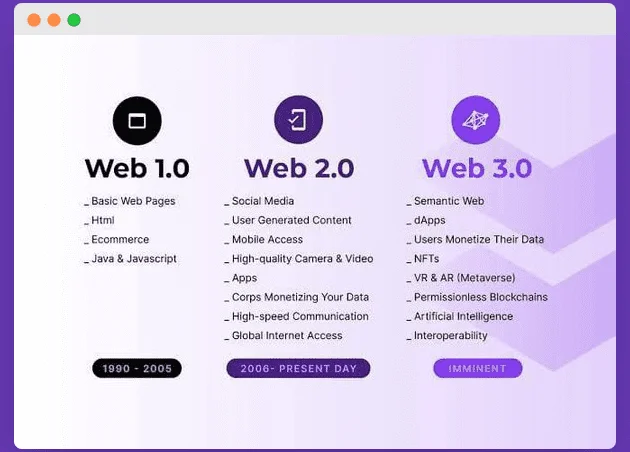
Iterations of the web
For example, let’s break down each of the iterations by explaining the thought process and typical ideas that exist behind each one of them.
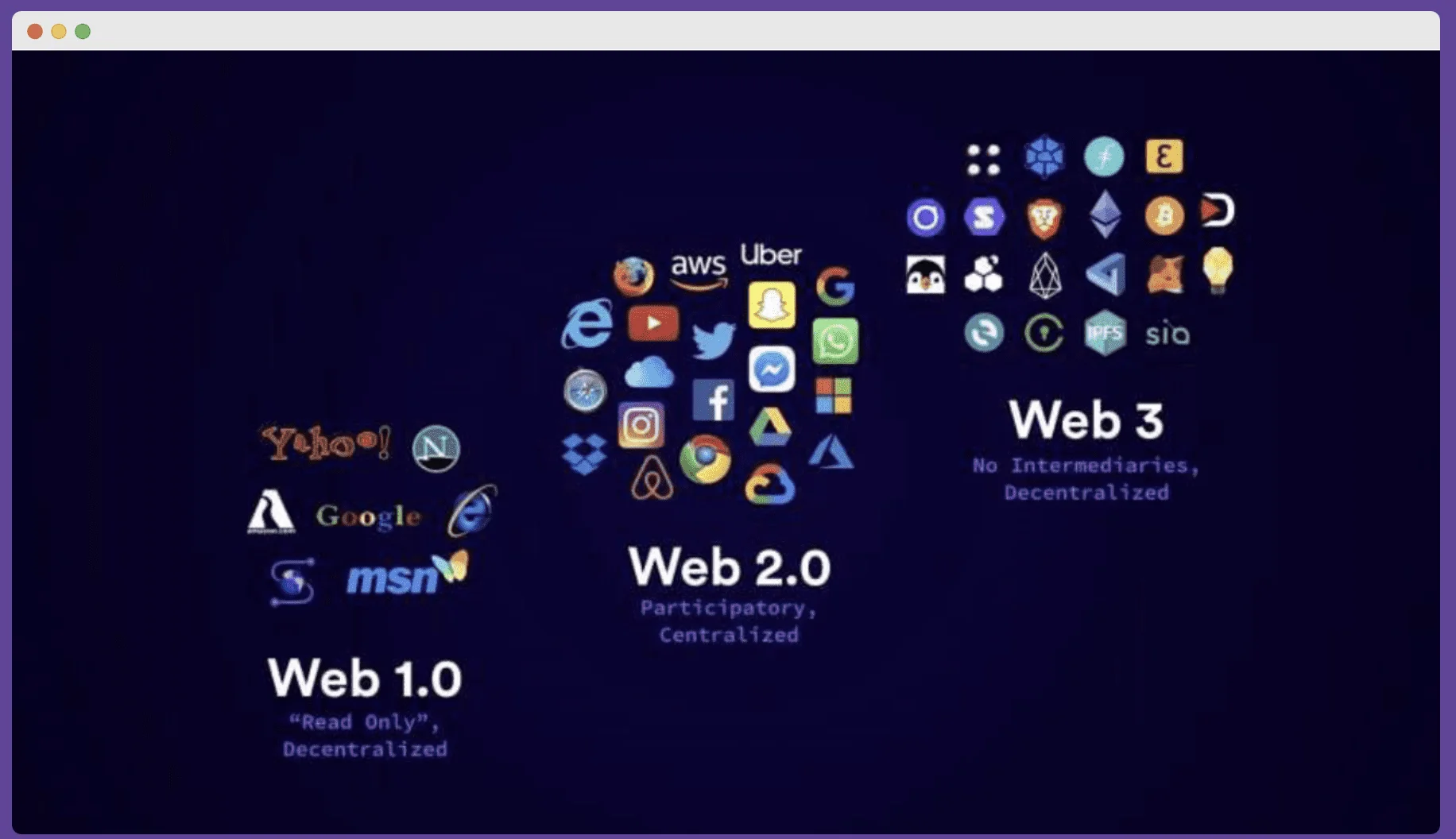
- Web 1 – Web 1.0 was the first iteration of the internet, which provided services that users could read online. This was commonly consisted of single-page websites, read-only sources, and worked by giving users particular pieces of information that they were searching for.
- Web 2 – Fostering collaboration and connectivity, Web 2 is all about providing services that people can access online. For example, websites that emphasize user-generated content that they don’t own, like social media, are prime web 2 sites. This culture of sharing and participating, but not owning, is what drives web 2.0. Major tech companies around the globe have actively used web 2.0’s capabilities.
- Web 3 – Founded on blockchain technology and artificial intelligence, web 3.0 is about providing users with person-to-person services. Instead of using middlemen companies, banks, or organizations, web 3 fosters independence and ensures that everyone owns the content they use and interact with.
Each one of these iterations works over the same medium, which is why a user never has to change the way they access the internet as they move through different iterations of the internet.
What’s different about web 3.0 PR?
When looking at the key pillars of web 3.0, users will find that it is about:
- Ownership – On web 3.0, users are able to actually own the content that they produce and contribute to the web. One often misunderstood aspect of this comes with NFTs (Non-Fungible Tokens), which allow for people to have ownership of anything they produce, whether that be a social media post (on a web 3 social connection app) or digital artwork that they’ve created.
- 3D Graphics – A movement towards 3D graphics and meta-verse worlds is at the core of many of the web 3.0 driving projects. If we look at some of the largest projects that are currently in this space, they all revolve around virtual reality gaming experiences or real estate opportunities.
- Connectivity – Without having to go through a middleman platform to access a service, web 3.0 allows people to connect directly. Advancing fully into web 3 would see everything become decentralized, which would dramatically reduce the importance of banks, large-scale companies, and even governments to some extent.
As we continue to move into further development of web 3.0 and more companies arise, we’re now getting to a point where companies are actively structuring web 3.0 based PR campaigns. Let’s discuss exactly how these form and the best practices for them.
What Web3 PR is, and how important it for Web3 companies?#
Web 3.0 PR is any public relations efforts that are run for a web 3.0 company or which uses web 3.0 tools to create public awareness. An example of the former would be a new web 3.0 company that wants to advertise to the masses, and thus launches web 3.0 PR campaigns to make sure that people know what their product does and why it’s important.
An example of the latter would be advertising within virtual spaces inside of meta-verse worlds, which is becoming more of a popular practice within non-invasive advertising spaces.
Effective Web3 PR campaigns are the central difference between projects that gain traction, funding, and followers and those that fizzle out into nothing. Strong campaigns can vary in style, especially as we enter into this recently developed segment of public relations.
What elements need PR in Web3?#
When considering the most common characteristics of Web 3.0, several different potential projects come to light. If an organization is looking to release a Web 3.0 project, its business model will often fall into one of three areas:
- NFT PR
- GameFi PR
- Play2Earn PR
Let’s break these down further.
NFT PR
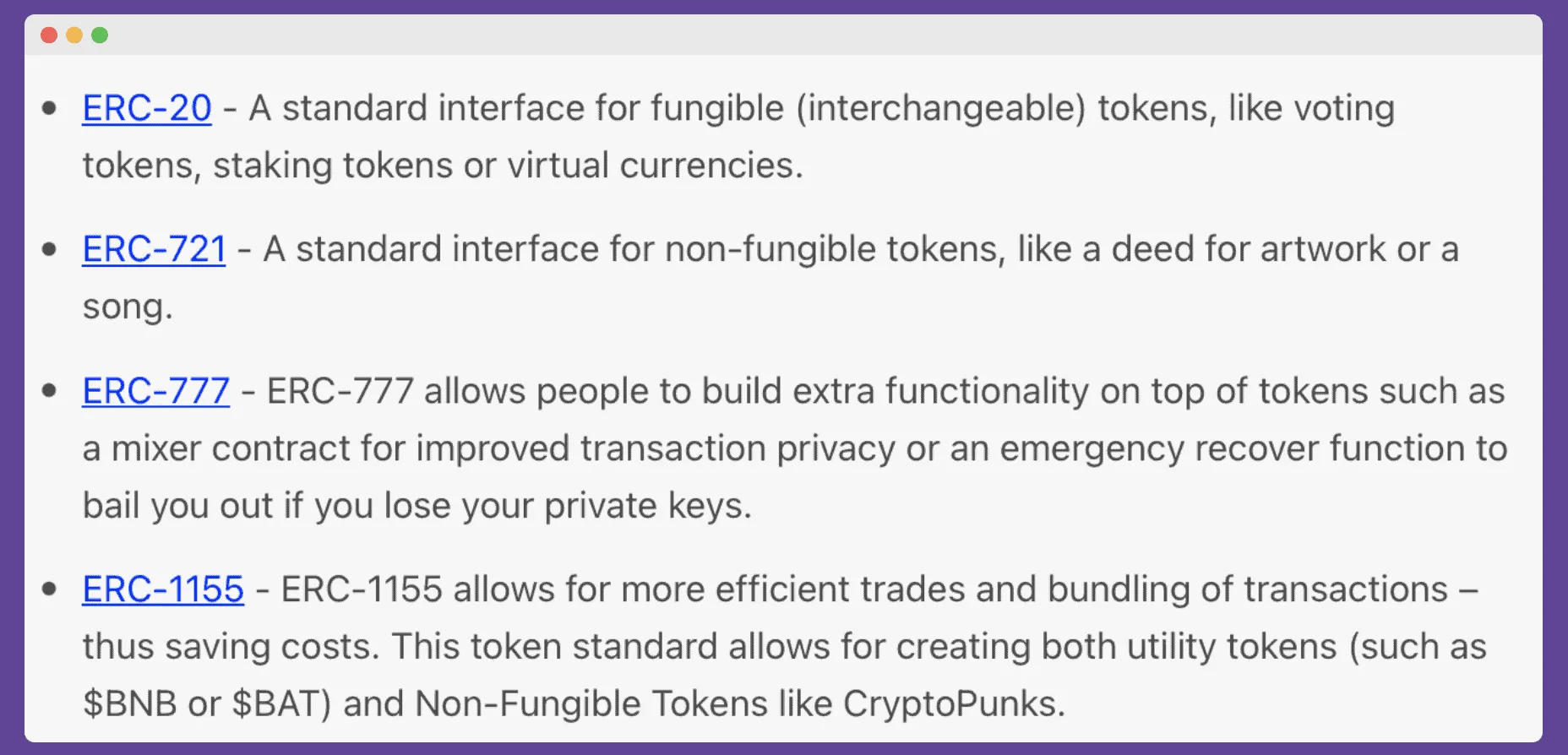
An NFT is a digital asset that’s verified by a smart contract on the Ethereum blockchain. Created by ERC-721 Tokens that no one can duplicate, an NFT could be absolutely any digital medium.
For example, digital artwork is perhaps the most common form of NFT, with this total market being worth $17 billion. However, alongside this asset class, almost anything that’s online could be made into an NFT.
A great example of this is when the confounder of Twitter, Jack Dorsey, sold the first tweet from his account on Twitter for a total of $2.9 million USD. This just goes to show the fervent market that has surrounded this pillar of Web 3.0.
Most typically, if you’re launching an NFT PR campaign, you’ll be launching a digital collection. An NFT really can be anything – just look at this NFT gif:

GameFi PR
GameFi is an industry that has arisen from the intersection of gaming and blockchain. A GameFi project incorporates elements of finance, letting players earn digital currency that can be sold on decentralized exchanges.
In combining these two fields, GameFi has reached a total valuation of 3.6 billion USD. It provides a unique experience to gamers while also enticing players into their games by offering NFTs and other digital assets for doing well.
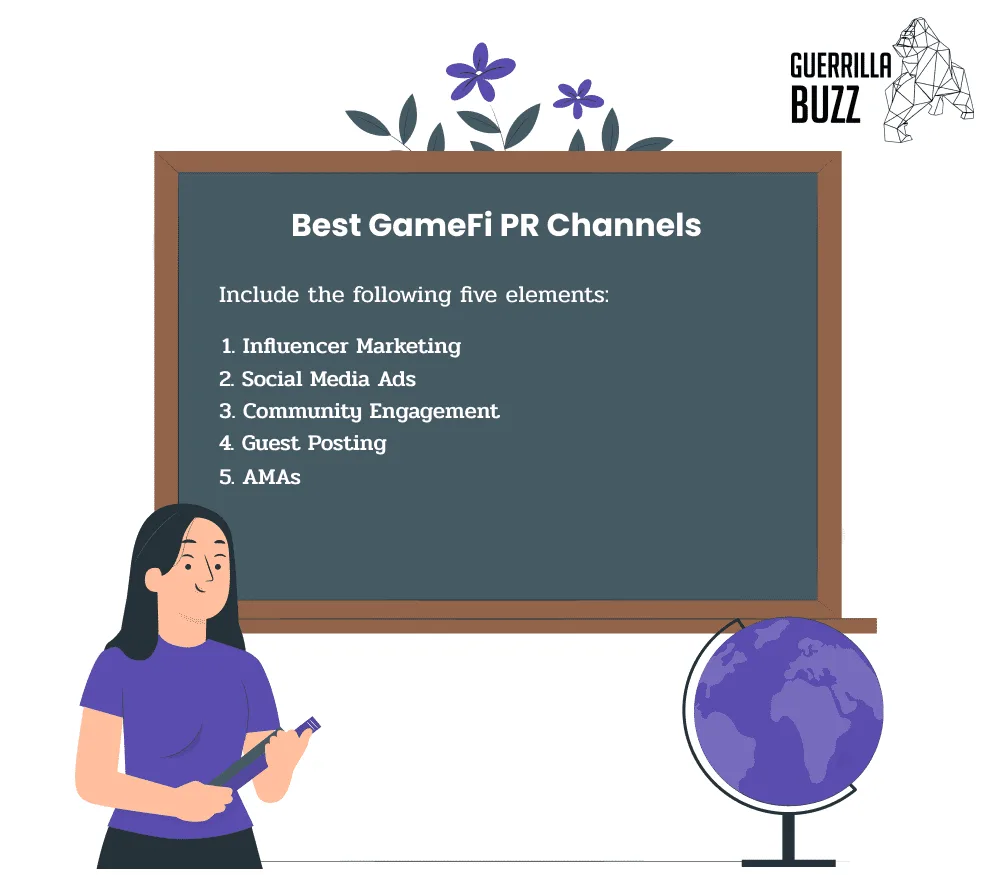
When launching a GameFi PR campaign, public relations campaign managers need to create a balance between pulling from blockchain PR and Gaming PR strategies. This makes it an interesting challenge that has Web 3.0 initiatives at its core.
Play2Earn PR
Stemming from GameFi but being much more specific, play2earn projects revolve around the central function of being rewarded every single time you play a game. Instead of playing a video game for experience points, you’re playing for streams of digital money. Most of the time, these scale with the level, meaning the more you play, the more you’ll be earning.
Play2Earn has completely shifted the gaming industry, providing a third answer to the normal free-to-play or pay-to-play gaming experience. This format has seen a huge uptake in Web 3.0, especially as it focuses on aspects of rewarding users for participating instead of charging them to participate as Web 2.0 gaming has done.
Equally, the development of 3D gaming has led many Play2Earn experiences into the metaverse, with whole societies and communities built in imaginary worlds. Much like GameFi, Play2Earn PR typically follows a blend of tactics found in blockchain marketing and gaming communities.

What is different about Web 3.0 PR from digital PR?#
Digital PR supplanted traditional forms of PR as the go-to strategy that all public relations managers are familiar with. However, with the rise of a new international of the internet, tactics have had to shift and change to reflect the principles that Web 3.0 holds at its center.
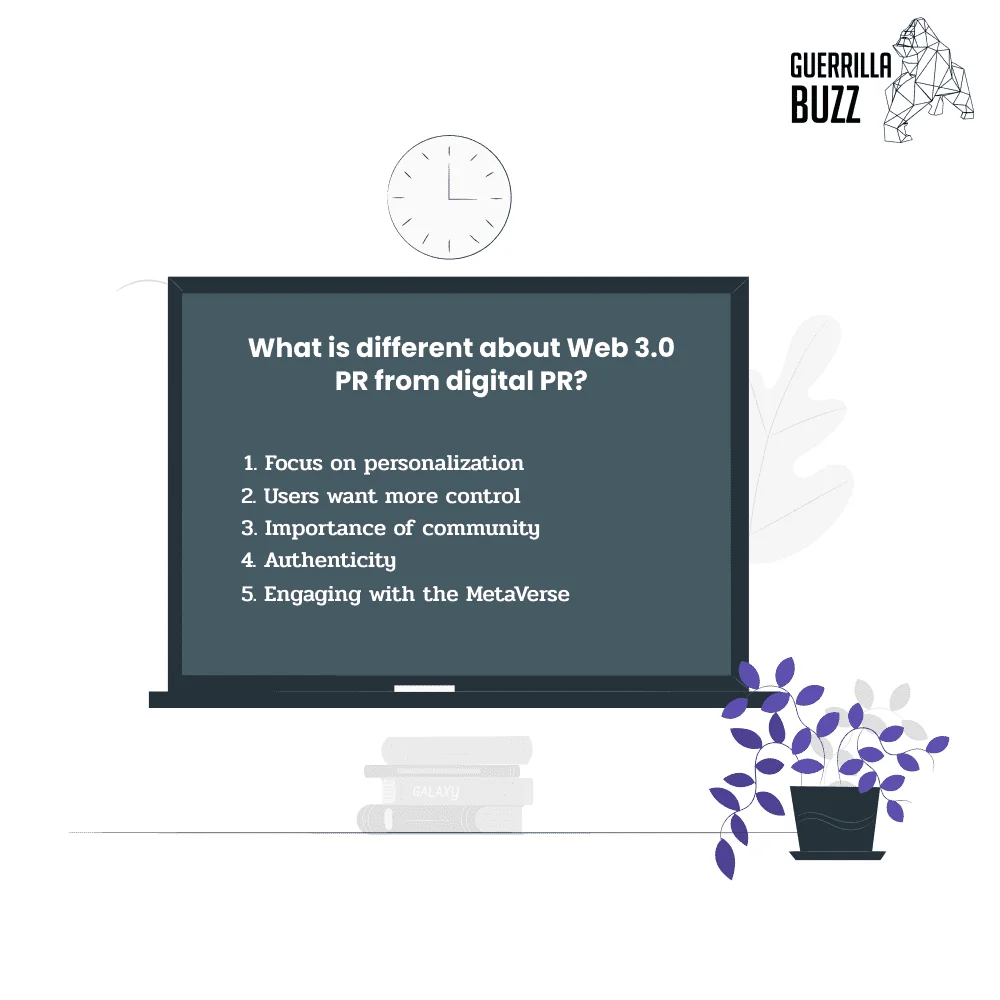
The major changes that have impacted PR strategy as we shift into Web 3.0 are:
- Focus on personalization
- Users want more control
- Importance of community
- Authenticity
- The Metaverse
Let’s break down these changes to a greater extent:
Focus on personalization
Even in Web 2.0, the rising desire for personalization amongst consumers has been steadily rising. The reasons for this are fairly clear to realize; after all, who would want to receive an advert for something they have no interest in, compared to something they’ve been actively searching for the past few weeks.
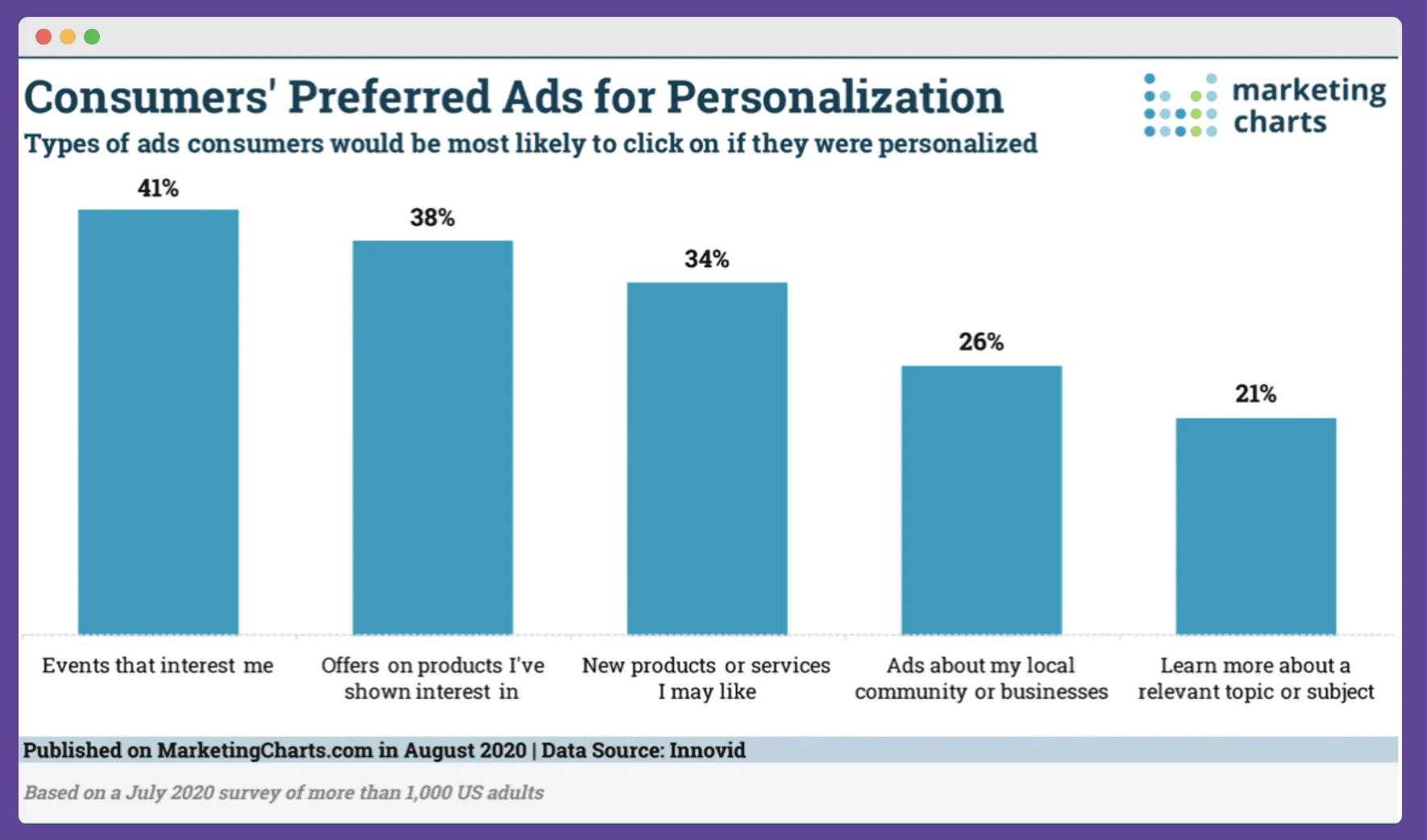
In fact, 77% of consumers feel actively frustrated when they get advertising content that isn’t related to them whatsoever. Personalization has been taken to the extreme within Web 3.0.
More Control
The paradigm of large tech companies owning absolutely everything posted on the internet within 2.0 is starting to crumble down. Especially when it comes to social media sites where users are not rewarded for their content (even if it goes viral and draws millions of people into the content), people are fed up with these systems where they’re never set to benefit.
One of the central pillars upon which Web 3.0 stands on is user-owned content. It wants to reverse the middleman system within which the content creators never benefit from their own creativity.
Platforms where users are paid when their data is used, or where their social content rewards them, or where they own everything they create are examples of web 3.0. Due to this, when pushing Web3 PR campaigns, you need to make sure that the story you’re telling highlights how the user benefits from your services.
Always make clear exactly what they are set to gain in terms of user-ownership from your content.
Community first approaches
Web 2.0 was about individuals and large platform systems. Web 3.0 is about communities working together to achieve a more balanced and accessible internet space.
Yet, an important measurement is knowing exactly where to focus your community efforts. For example, both GameFi and Play2Earn PR strategies rely heavily on gaining community attention. But, if you were to launch a campaign using spaces like BusinessInsider, there would be a complete mismatch between your project and the community that you’re targeting.
Combining with the desire for personalization, you need to make sure that when targeting community engagement, you focus on the correct channels to make sure the right people are finding your campaign.
Authenticity
At its core, Web 3.0 is possible due to blockchain technology. Part of relying on blockchain means that PR managers must adapt their focuses to match the key ideas of this technology ecosystem. One of these core ideas is transparency, with authenticity becoming a central factor that can make Web 3 public relations campaigns sink or swim.
When crafting your campaigns, be sure to place authenticity at their center. You want to make sure that you stick to any promises that your campaigns detail. Many companies have found success by outlining their whole business model propositions for the future. Equally, DAO (decentralized autonomous organizations), where communities actually lead projects through governance tokens, has become a great way to make sure a project is completely fair, transparent, and led by the community.
In Web 3.0 PR, you won’t get very far if you’re not open, honest, and ready to stick to what you announce in your campaigns.
Moving into virtual spaces
While not all Web 3.0 campaigns need to make use of the MetaVerse, it does send a message to your potential future users that let them know you are on the same page as them when it comes to technology.
Instead of moving to digital media advertising platforms, you can start to create and distribute non-invasive advertisements on metaverse platforms. Depending on the type of project you’re looking to release, you could even put your advertisements into Play2Earn game arenas, directly talking to the community that you’re trying to engage with.
There are a range of reasons that people join the MetaVerse, varying depending on what exactly they’re looking for within this space.

The age of Web 3.0 PR is all about thinking outside the box.