
TL;DR
We analyzed 54,177 collection pages on OpenSea and found that 76% of the top pages are spam, exploiting OpenSea’s domain authority for SEO gains.
OpenSea, the largest NFT marketplace on the internet, attracts millions of visitors each month and hosts thousands of NFTs. However, our recent traffic analysis at GuerrillaBuzz identified a significant issue: a significant portion of OpenSea’s highest-traffic collection pages are spam, abused by bad actors leveraging the platform’s high domain authority for SEO gains.
Key Takeaways#
- Spam Domination: Out of the 522 collection URLs analyzed, 401 were identified as spam, accounting for 76.82% of the total.
- Exploited Authority: OpenSea’s domain authority is being exploited through spam and low-quality content.
- Prolonged Presence: Some of these pages have been live for months, indicating a lack of effective moderation or community reporting.
Our Discovery#
At GuerrillaBuzz, we conducted a comprehensive traffic analysis, crawling 54,177 collection pages on OpenSea. Out of these, we identified 522 pages that drive 100 or more organic visitors per month. Many of these high-traffic collection pages appear to be spam, likely created to leverage OpenSea’s authority for higher search engine rankings.
This research began as an SEO project to gain a better understanding of the current NFT situation by analyzing the largest NFT marketplace, OpenSea. We assumed that analyzing traffic trends across different collections could provide valuable insights. However, during our analysis, we discovered the significant presence of spam.
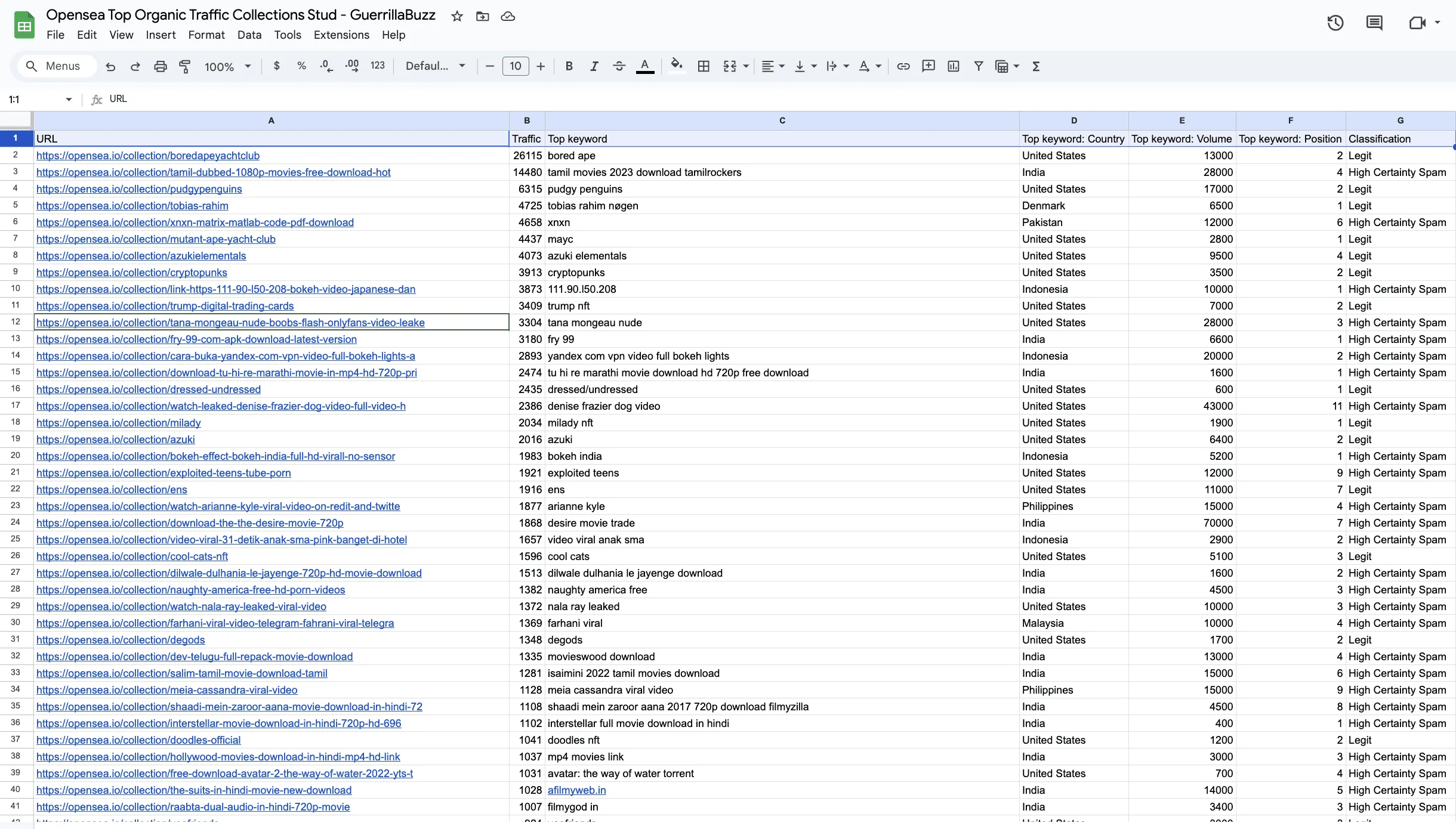
We reported these findings to OpenSea, providing them with a detailed spreadsheet listing all the contaminated collections and pages.
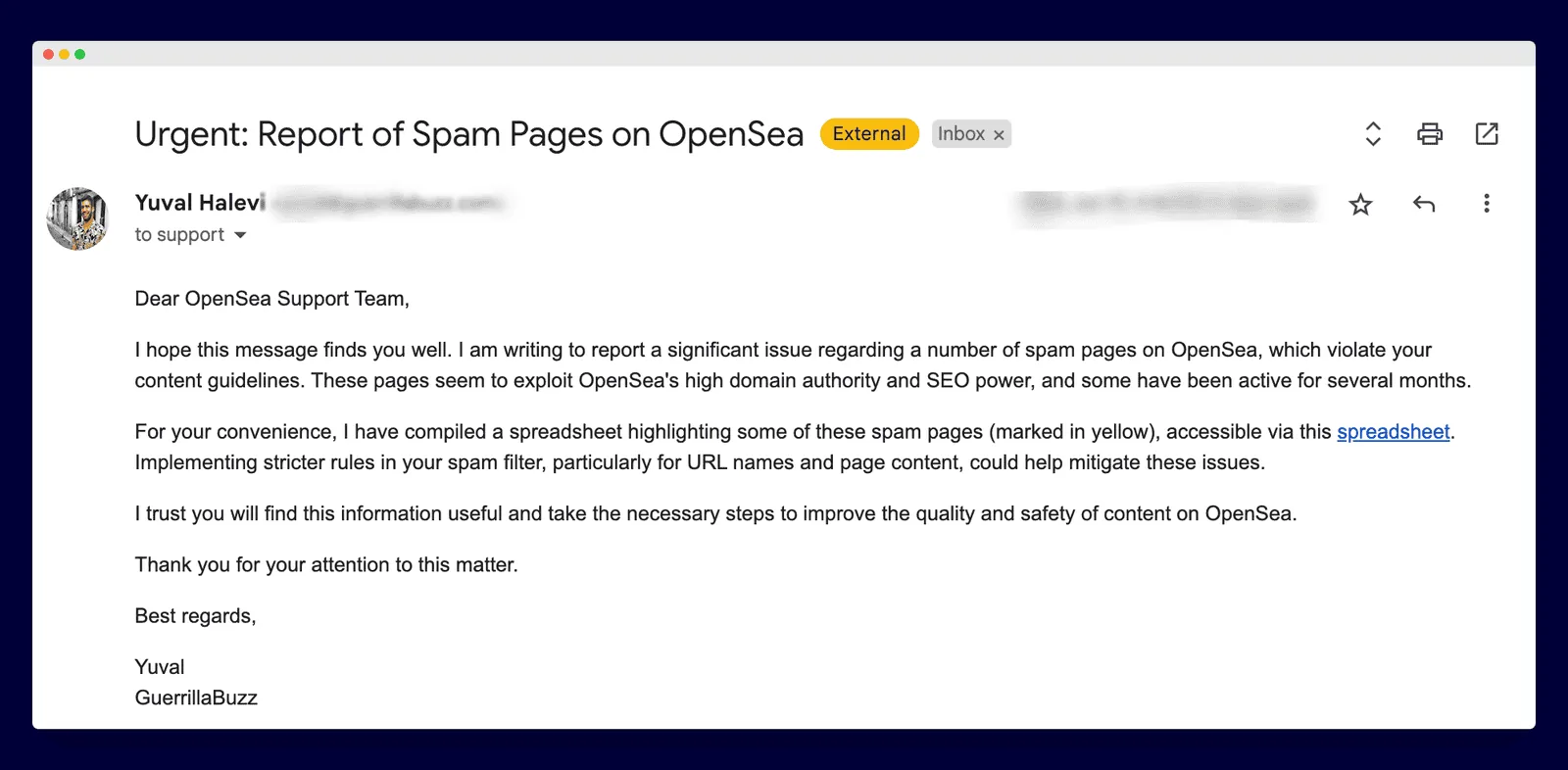
In addition to our report, we decided to share our discoveries here to raise awareness about this issue.
Here’s the data we found during our research. After analyzing 54,177 collection pages on OpenSea, we identified the top 522 collection pages that receive 100 or more organic visitors per month:
How It Works:#
OpenSea’s reputation as a high-authority website allows content to get indexed quickly and rank higher than content from less authoritative websites. Unfortunately, bad actors have found ways to manipulate this system.
- Creating an Account: A user opens an account on OpenSea.
- Naming the Collection: The user names the collection with high-search-volume SEO keywords to attract search engine attention.
- Uploading Spam Collections: The user uploads a collection containing spam or low-quality content.
- Search Engine Indexing: Search engines crawl and index the page for its focus keywords, leveraging OpenSea’s domain authority.
- Traffic Boost: The spam page starts receiving thousands of organic visitors per month, appearing legitimate due to its high ranking and association with OpenSea.
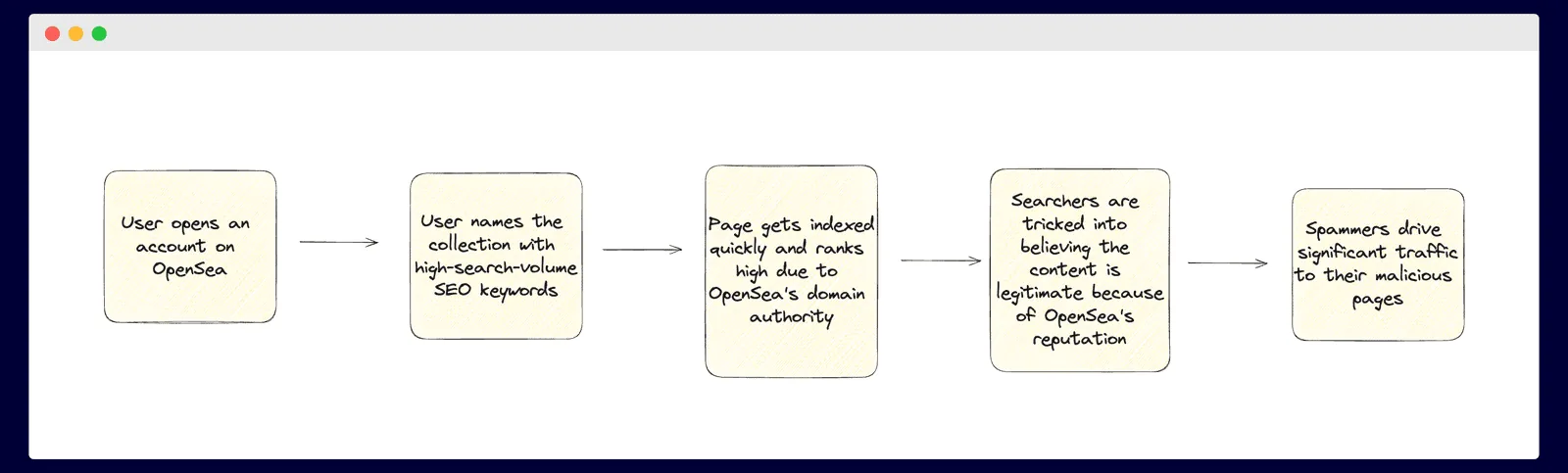
By understanding this process, it becomes clear how spammers exploit OpenSea’s platform to boost their spam pages in search engine rankings.
How It Looks Like:
Spammers begin by identifying keywords with high search volume. While there isn’t direct evidence, we assume they run reverse SEO research on popular terms related to torrents, downloads, 1080p, free downloads, and similar keywords.
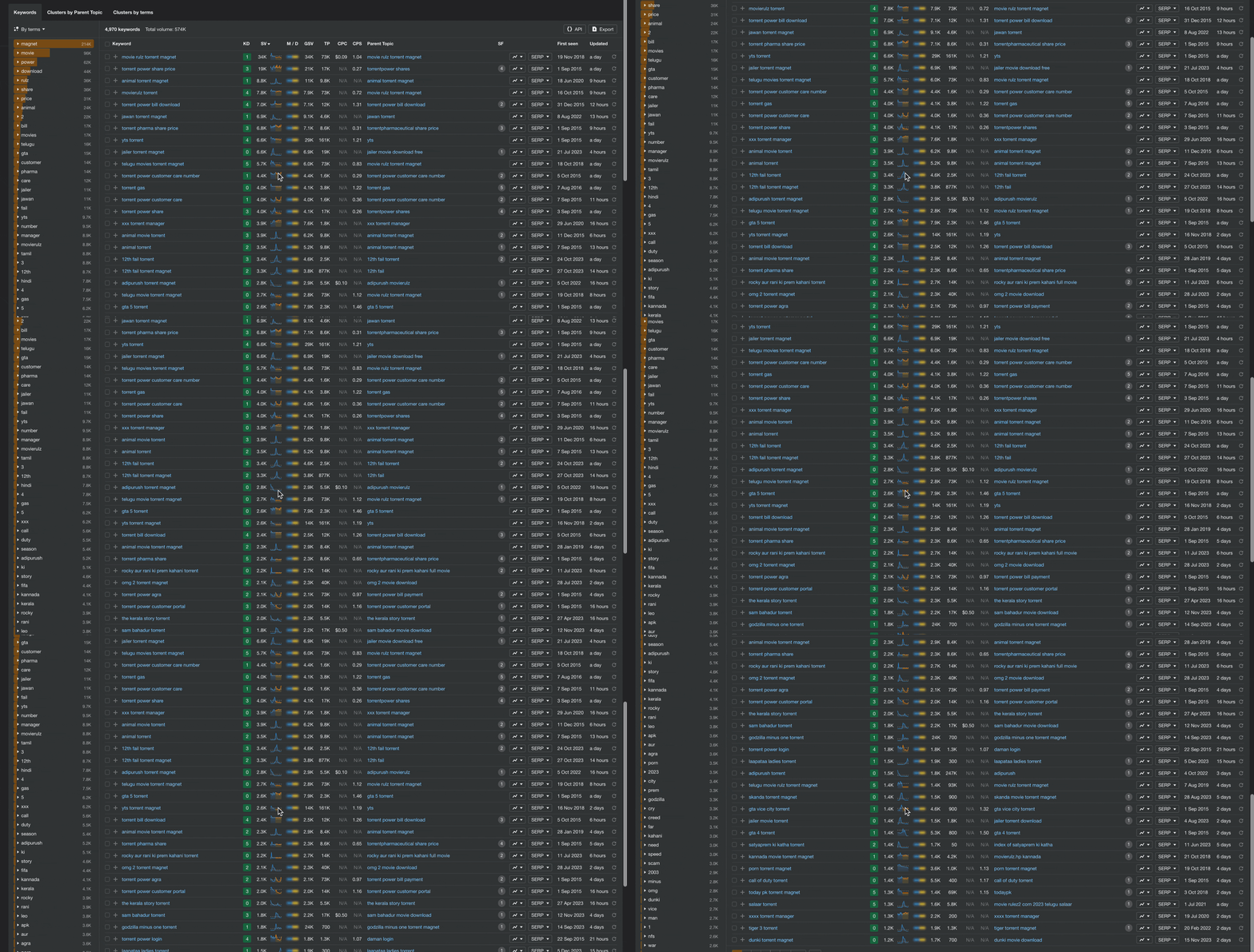
They then create a page on OpenSea with the targeted keyword in both the URL and the collection name.
For example:
https://opensea.io/collection/tamil-dubbed-1080p-movies-free-download-hot
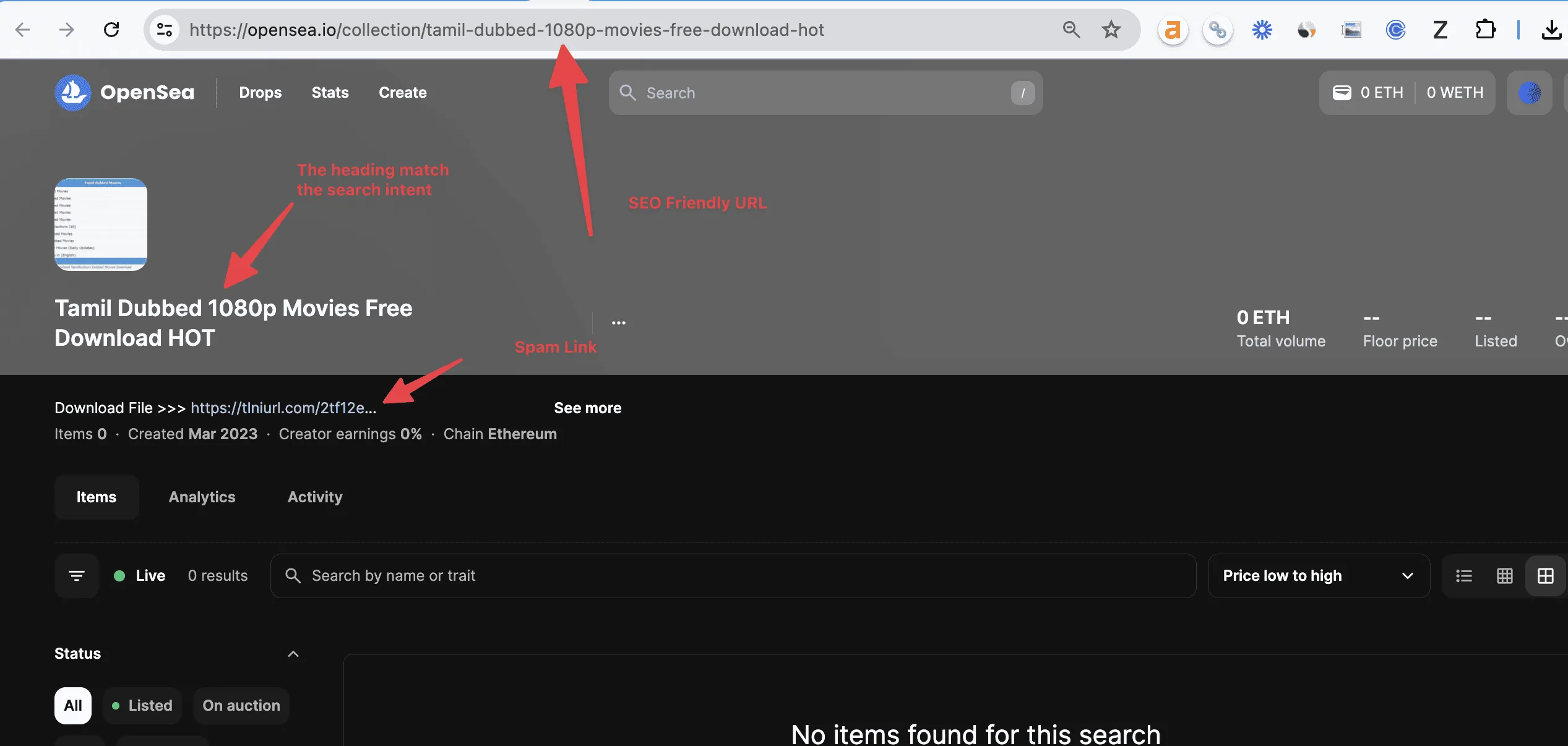
Once the page is created, it doesn’t just rank for a single keyword; it starts to rank for multiple related search terms.
In this case, the page ranks for 434 keywords, driving 14,774 organic visitors per month for this single spam page!
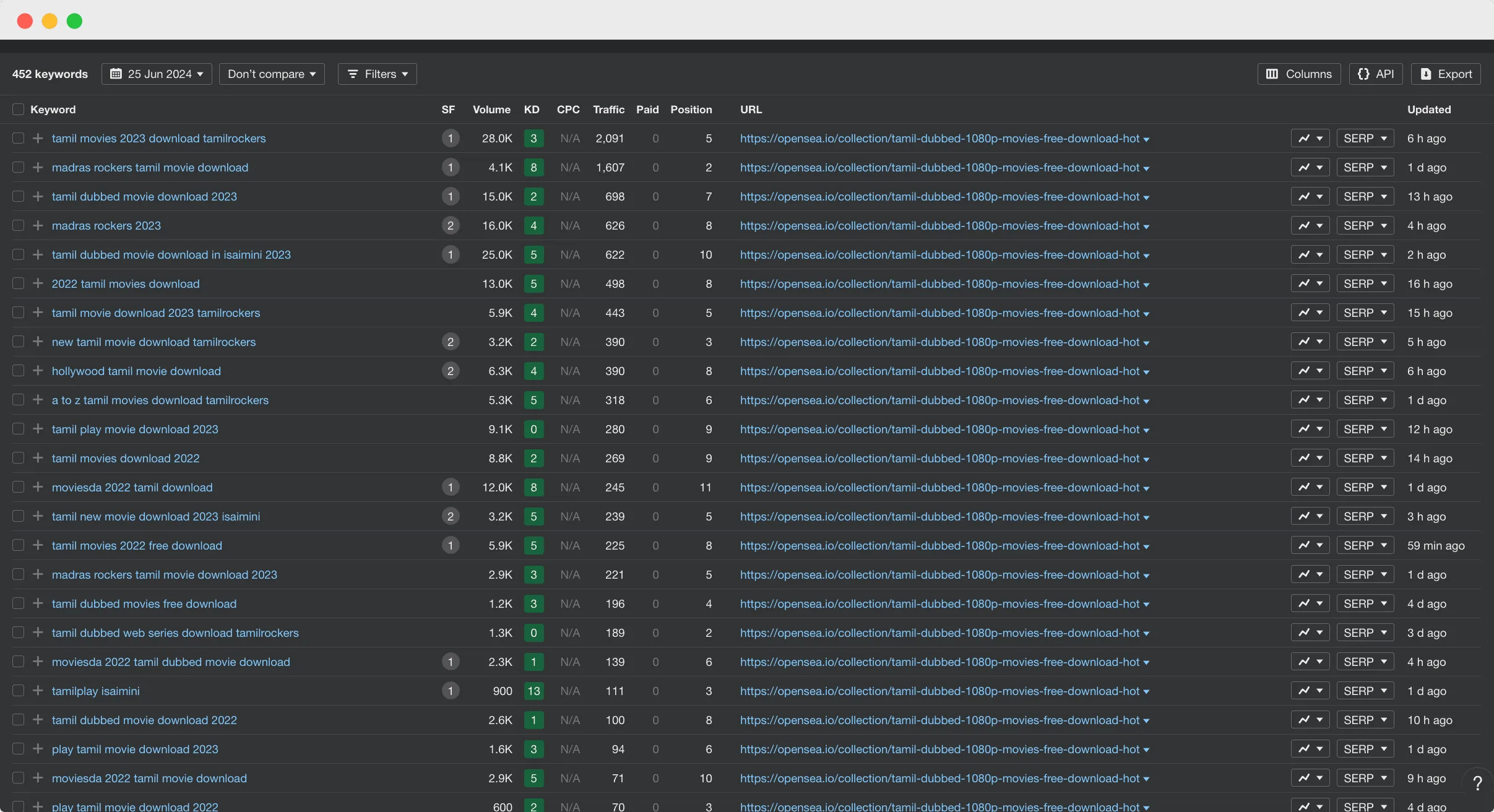
The primary goal is to entice users to click on the link, thereby boosting traffic and exploiting OpenSea’s domain authority for SEO gains.